

How Long Does It Take to Break In Birkenstocks? What to Expect During the Adjustment Period
If you've just bought your first pair of Birkenstocks, you might be wondering why they don't feel instantly soft like a pair of sneakers. That's completely normal, and it's actually part of what makes Birkenstocks so popular.
Unlike shoes that rely on thick foam cushioning, Birkenstocks are built around a supportive cork-latex footbed that gradually molds to the unique shape of your feet. Instead of breaking down over time, they become more personalized with every wear, providing the custom support that has made them a favorite for decades.
The Short Answer
Most Birkenstocks take 1 to 2 weeks to break in when worn for short periods each day.
- Original Footbed: 1 to 2 weeks
- Soft Footbed: 3 to 7 days for most people
- EVA styles: Little to no break-in required
Your exact timeline depends on the style, footbed, upper material, and how often you wear them. The key is to ease into them rather than wearing them all day on your first outing.
Why Do Birkenstocks Feel Stiff at First?
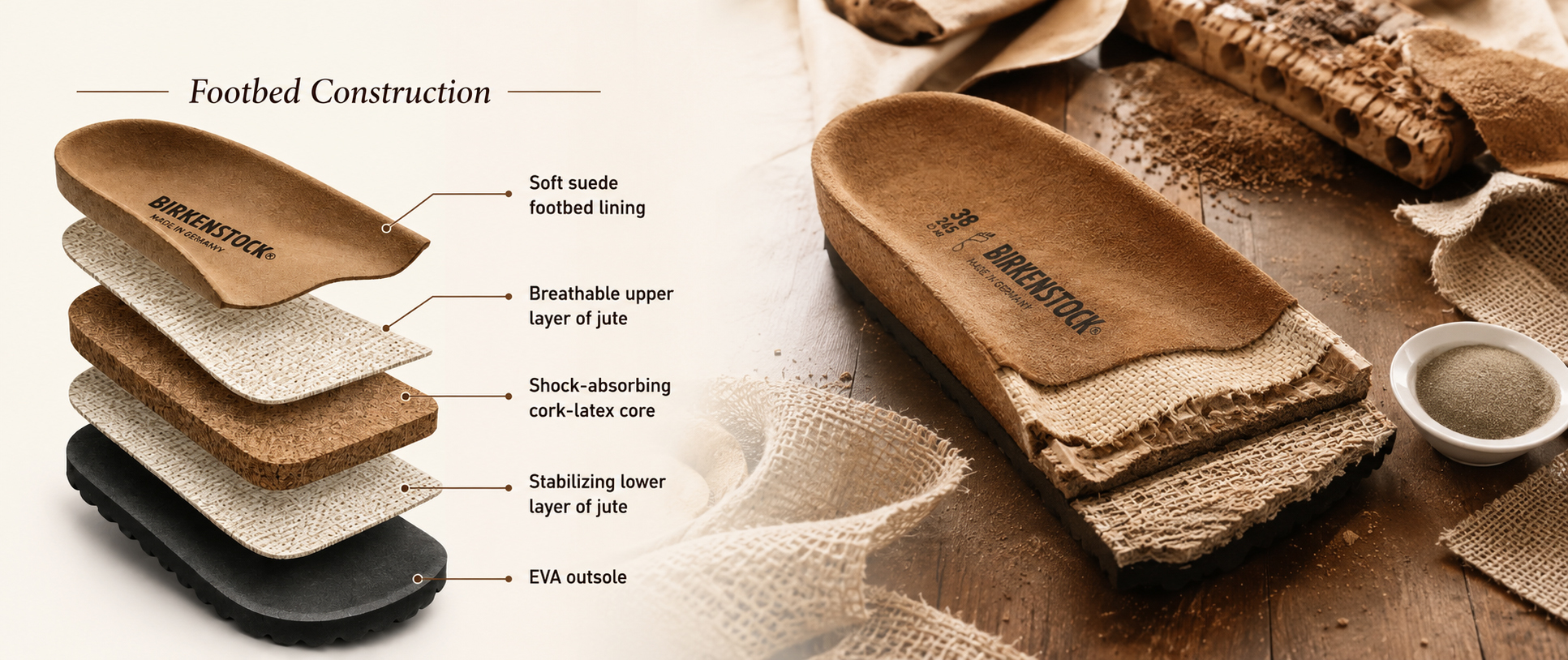
The signature Birkenstock footbed is made from layers of natural cork and latex that provide structured support instead of soft cushioning. When they're brand new, the cork hasn't adapted to anyone's foot yet. As you wear them, your body heat and natural walking motion gradually help the footbed mold to your arches, heel, and toes.
This personalized fit is one of the biggest reasons Birkenstocks remain comfortable for years. While they may feel firmer than expected during the first few wears, that firmness is intentional. It provides the support that many people come to appreciate once the sandals have adjusted to their feet.
Why the Break-In Period Is Worth It
Many sandals feel comfortable on day one because they're made with soft foam that compresses quickly. Birkenstocks take a different approach. Instead of cushioning that flattens over time, the cork-latex footbed maintains its structure while adapting to your unique footprint. The result is a sandal that often becomes more comfortable the longer you own it. Many longtime Birkenstock owners say their favorite pair is the one they've worn for years, because it feels custom-made for their feet.
Soft Footbed vs. Original Footbed
One of the biggest factors affecting break-in time is which footbed you have.
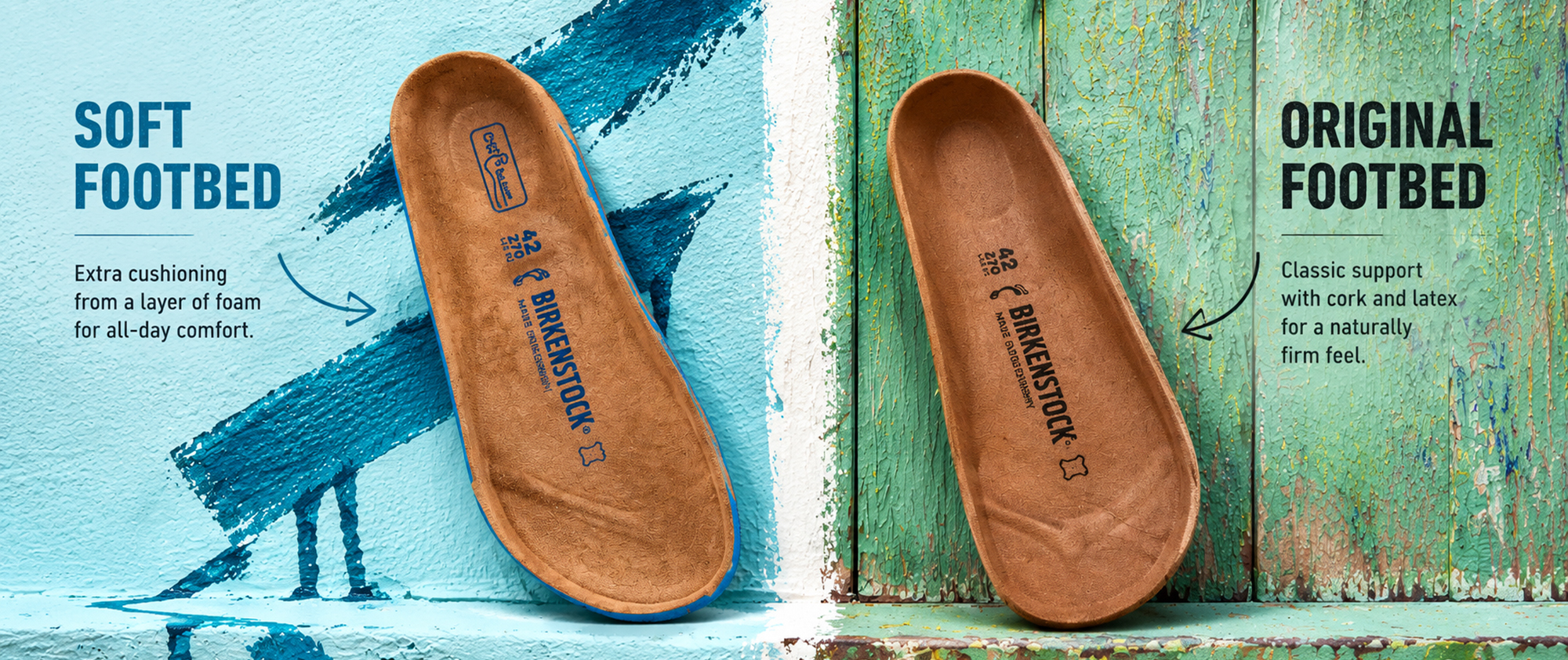
This is Birkenstock's classic design: firm cork-latex construction, pronounced arch support, a deep heel cup, a spacious toe box, and a raised toe bar for natural movement. Because it provides more structured support, it usually takes 1 to 2 weeks to fully adapt to your feet. It's an excellent choice for people who spend long hours standing or walking and want maximum long-term support.
The Soft Footbed includes an additional layer of foam cushioning beneath the suede liner. This extra layer creates a slightly softer feel right out of the box while still maintaining the signature Birkenstock support. Most people find Soft Footbed styles become comfortable within 3 to 7 days, making them a popular option for first-time Birkenstock owners, travelers, people who prefer extra cushioning, and anyone sensitive to firmer footwear.
Neither option is better than the other. It comes down to personal preference and how much structure your feet need. If you're not sure which one you have, check the underside of the footbed or the inside of the strap — Soft Footbed styles are usually labeled, and they typically run in the same style names (like Boston Soft Footbed or Arizona Soft Footbed) as their Original Footbed counterparts.
What Affects How Long They Take to Break In
- Footbed Type: Soft Footbeds generally require less adjustment time than the Original Footbed.
- Upper Material: Suede uppers and Birko-Flor tend to feel soft almost immediately. Oiled leather and nubuck usually take about a week to become fully flexible. EVA needs virtually no break-in at all.
- Style: Open styles like the Arizona often break in faster because you can easily adjust the straps as your feet settle in. Closed styles like the Boston may take a little longer since they cover more of the foot.
- Previous Footwear: If you're switching from heavily cushioned athletic shoes or flip-flops, the supportive arch may feel more noticeable at first. People who already wear supportive footwear or orthotics often adjust more quickly.
- Wear Schedule: Short daily wear sessions help the footbed mold naturally. Trying to wear brand-new Birkenstocks for an entire day is one of the most common reasons people experience discomfort.
Break-In Time by Style and Material
- Arizona (Original Footbed): about 1 week
- Boston (Original Footbed): 1 to 2 weeks
- Gizeh (Original Footbed): 1 to 2 weeks
- Mayari (Original Footbed): around 1 week
- Franca (Original Footbed): around 1 week
- Milano (Original Footbed): 1 to 2 weeks
- Any Soft Footbed style: 3 to 7 days
- EVA Collection (any style): little to no break-in
These are general guidelines. Everyone's feet are different, so your experience may vary slightly.
What to Expect During the Break-In Process
Day 1
The footbed feels firm. You notice the arch support. Wear them for 30 to 60 minutes and adjust the straps for a secure but comfortable fit.
Days 2 to 4
The cork begins responding to your foot. Leather straps start becoming more flexible. Walking feels more natural. Increase wear time to one or two hours if comfortable.
Week 1
The footbed starts developing a slight impression of your foot. Pressure points become less noticeable. Most people can comfortably wear them for several hours.
Week 2
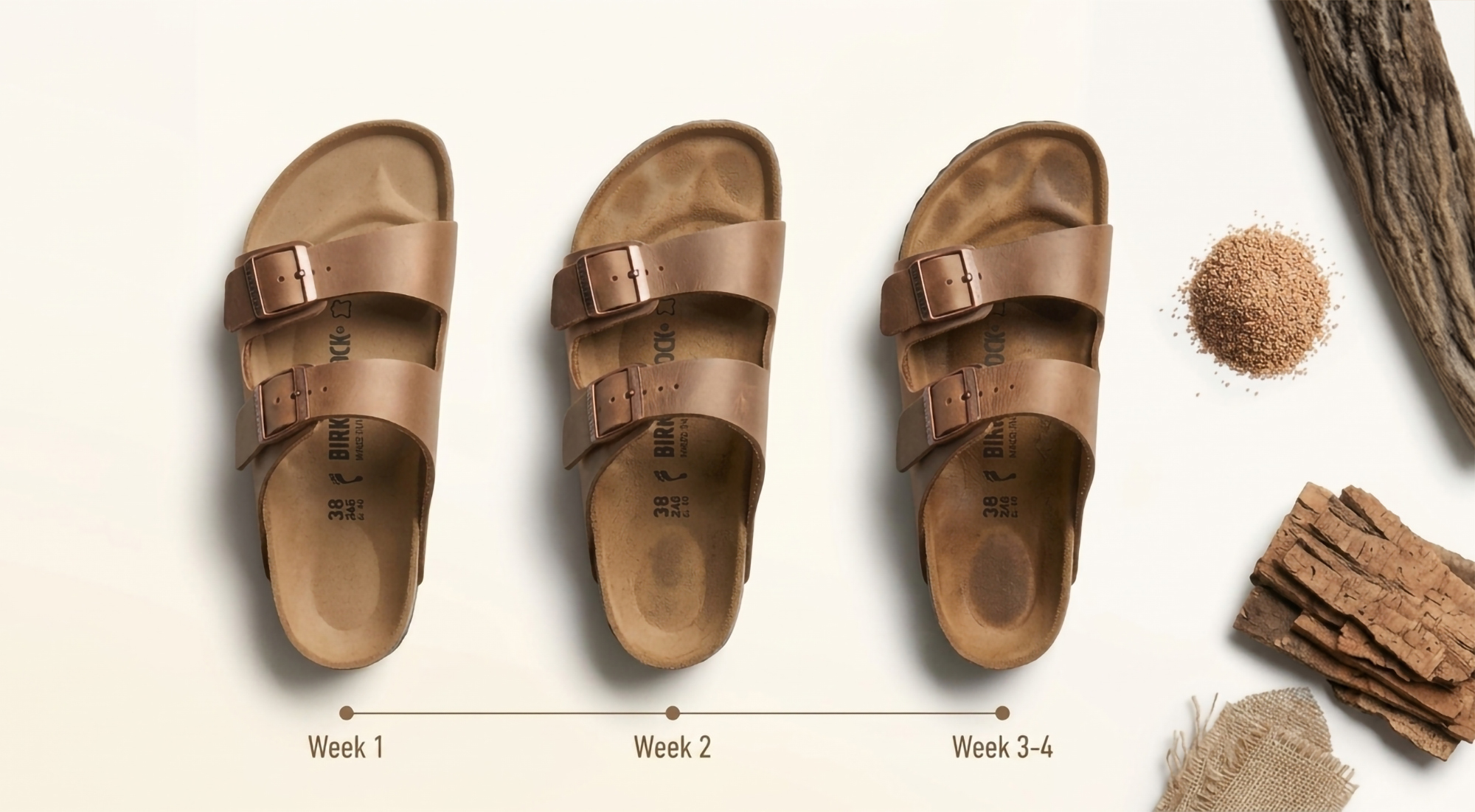
The cork has molded more closely to your foot shape. The straps feel more flexible. Most people can comfortably wear their Birkenstocks throughout the day. At this point, many owners understand why Birkenstocks have such a loyal following — the sandals begin to feel uniquely shaped to their feet rather than simply worn.
What's Normal During the Break-In Period
Breaking in Birkenstocks shouldn't be painful. While some mild discomfort is expected as your feet adjust to the supportive footbed, you should notice improvement with each wear.
- Mild Arch Pressure: If you've never worn supportive sandals before, you may notice pressure beneath your arches. The contoured footbed is designed to support the natural shape of your foot rather than letting it flatten, and this sensation typically fades as your feet adjust.
- A Firm Footbed: Many new owners expect Birkenstocks to feel soft immediately. Instead, the cork-latex footbed feels firm at first because it hasn't yet molded to your foot. Over time, body heat and walking motion create a customized footprint.
- Slight Strap Stiffness: Leather and Birko-Flor straps may feel a little stiff during the first few wears, and naturally become more flexible with continued wear.
- Footbed Impressions: Don't worry if you see faint footprints forming on the suede liner. This shows the cork footbed is gradually adapting to your unique foot shape.
What's Not Normal
- Sharp or stabbing pain, large blisters, numbness or tingling, constant rubbing that gets worse, toes touching the front edge, heel hanging over the back, or arch pain that doesn't improve after several wears are all signs something isn't right. In many cases, these issues aren't caused by the sandals themselves. They're caused by an incorrect size, width, or strap adjustment. If something feels seriously uncomfortable after several wears, avoid trying to "push through it." A proper fit makes all the difference.
Five Mistakes That Make Breaking In Harder
- Wearing Them All Day Immediately
This is by far the biggest mistake. Even if your sandals feel comfortable at first, wearing them for eight or ten hours on day one doesn't give your feet time to adjust. Start with shorter wear sessions and gradually increase the time each day.
- Choosing the Wrong Width
Birkenstock offers many styles in both Regular and Narrow widths. Choosing the wrong width can create unnecessary rubbing or pressure that won't disappear with breaking in. If you're unsure which width is right for you, a fitting in-store can help.
- Tightening the Straps Too Much
Many people assume tighter straps mean a better fit. Actually, Birkenstocks are designed so your foot can move naturally while walking. The straps should feel secure without squeezing. As a general guideline, you should be able to slide a finger between the strap and the top of your foot.
- Expecting Them to Feel Like Sneakers
Birkenstocks aren't designed to feel like heavily cushioned athletic shoes. Instead, they provide structured support that helps distribute pressure across your feet. The feeling is different, but for many people, it's exactly why they become their favorite everyday footwear.
- Wearing Them Only Occasionally
Ironically, wearing your Birkenstocks only once every week or two often makes the break-in process take longer. Short, consistent wear every day allows both your feet and the footbed to adapt more naturally.
Tips to Make the Break-In Process Easier
- Start Indoors: Wear your Birkenstocks around the house for the first few days before taking them on long walks. This lets you monitor how your feet respond while avoiding unnecessary rubbing.
- Increase Wear Time Gradually: A simple schedule works well for many people — Day 1: 30 to 60 minutes, Days 2-3: 1 to 2 hours, Days 4-7: 2 to 4 hours, Week 2: full-day wear if comfortable. Listen to your feet, and if they feel tired, take a break and try again later.
- Wear Thin Socks If Needed: While many people prefer wearing Birkenstocks barefoot, thin socks can reduce friction during the first few wears. This is especially helpful with Boston clogs and other closed-toe styles.
- Adjust the Buckles: As the leather softens, your sandals may fit slightly differently. Don't hesitate to fine-tune the buckle position during the break-in period.
- Condition Leather Uppers: If you have oiled leather Birkenstocks, applying a leather conditioner occasionally can help keep the upper soft and supple. Avoid conditioning suede styles, as it can change their appearance.
- Consider Soft Footbed If You're Sensitive to Firmness: If you've broken in Birkenstocks before and always found the first two weeks uncomfortable, a Soft Footbed style may suit you better going forward.
Simply Birkenstock Tip
One of the most common mistakes we see is customers trying to judge their new Birkenstocks after wearing them for an entire day. Instead, wear them for short periods over the first week. Giving both your feet and the cork footbed time to adjust usually leads to a much smoother break-in experience.
How Do You Know When Your Birkenstocks Are Fully Broken In
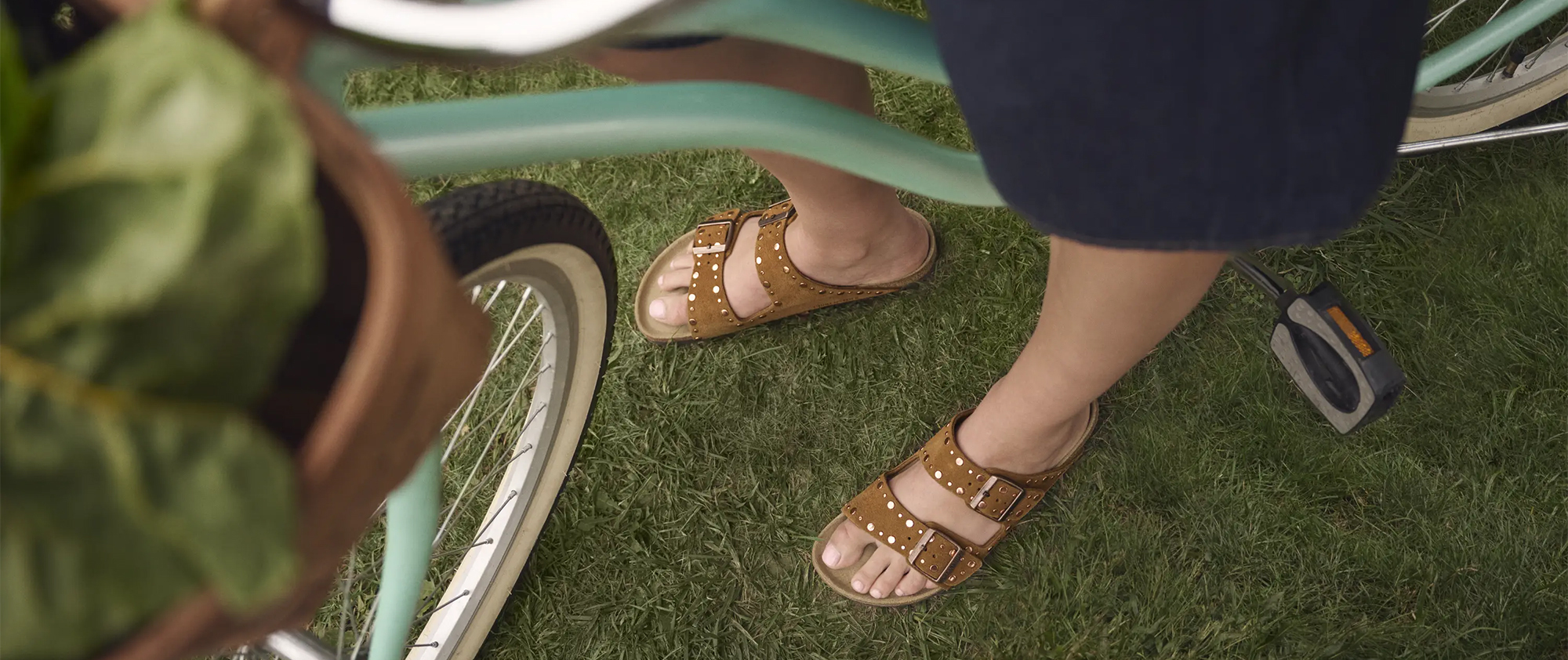
After a week or two of regular wear, you'll likely notice a big difference in how your Birkenstocks feel. Instead of feeling stiff, they'll begin to move naturally with your feet. Signs they've fully broken in: the footbed has developed a subtle impression of your foot, the cork feels supportive but no longer overly firm, the straps feel flexible and comfortable, you can wear them for a full day without rubbing or pressure points, and walking feels natural without thinking about the sandals at all.
For many people, this is the moment Birkenstocks become their go-to footwear for everyday life, travel, and long days on their feet.
Why Trust Simply Birkenstock
At Simply Birkenstock, we've specialized in Birkenstock footwear for more than 20 years. As an Authorized Birkenstock USA Retailer since 2002, we've helped thousands of customers find the right size, width, and footbed for their lifestyle. Our recommendations come from hands-on experience fitting customers every day, not just reading product specifications.
Ready to Find Your Perfect Pair
- Choosing the right size and footbed from the beginning makes the break-in process much easier. Whether you're interested in the iconic Arizona, the classic Boston clog, or another Birkenstock favorite, our team can help you find the best fit for your feet. Browse our collection of authentic Birkenstock footwear, or visit us in-store for personalized sizing advice.
Frequently Asked Questions
How long does it take to break in Birkenstocks?
Most Birkenstocks take 1 to 2 weeks to break in with regular daily wear. Soft Footbed models often feel comfortable within 3 to 7 days, while EVA styles usually require little to no break-in period.
Is it normal for Birkenstocks to hurt at first?
Some mild arch pressure or stiffness is completely normal during the first few wears. Sharp pain, numbness, or large blisters are not. If you're experiencing those issues, double-check your size, width, and strap adjustment.
Can I speed up the break-in process?
Yes. Wear your Birkenstocks for short periods each day, adjust the straps correctly, and avoid wearing them all day on your first outing. Consistent daily wear is the best way to help the footbed mold naturally to your feet.
Can I wear socks while breaking them in?
Yes. Thin socks can reduce friction during the first few wears and help prevent blisters, especially with Boston clogs or other closed-toe styles.
Do Birkenstocks stretch?
The leather straps may soften and become slightly more flexible over time, but they won't stretch dramatically like some leather shoes. Instead, it's the cork-latex footbed that gradually molds to your unique foot shape.
Why do my Birkenstocks still feel hard after two weeks?
Consider how often you've been wearing them. Occasional wear slows the break-in process. If you've been wearing them regularly and they're still uncomfortable, it's worth checking whether the size, width, or footbed type is the best match for your feet.
Should I size up if they feel tight?
Not necessarily. Birkenstocks are designed to fit differently than sneakers. Sizing up simply because they feel firm can leave you with sandals that are too loose once broken in. If you're unsure, visit an authorized retailer for a professional fitting.
Does every Birkenstock style break in the same way?
The overall process is similar, but some styles feel different during the adjustment period. Open styles like the Arizona are often easier to fine-tune thanks to their adjustable straps, while closed styles like the Boston may take a little longer to feel fully settled. Soft Footbed models also tend to become comfortable more quickly than Original Footbed styles.